
-
All prices are in USDChange
Change Currency


Blog
What Is a Dough Sheeter? Do You Need One?
Posted on Sep 16th 2026
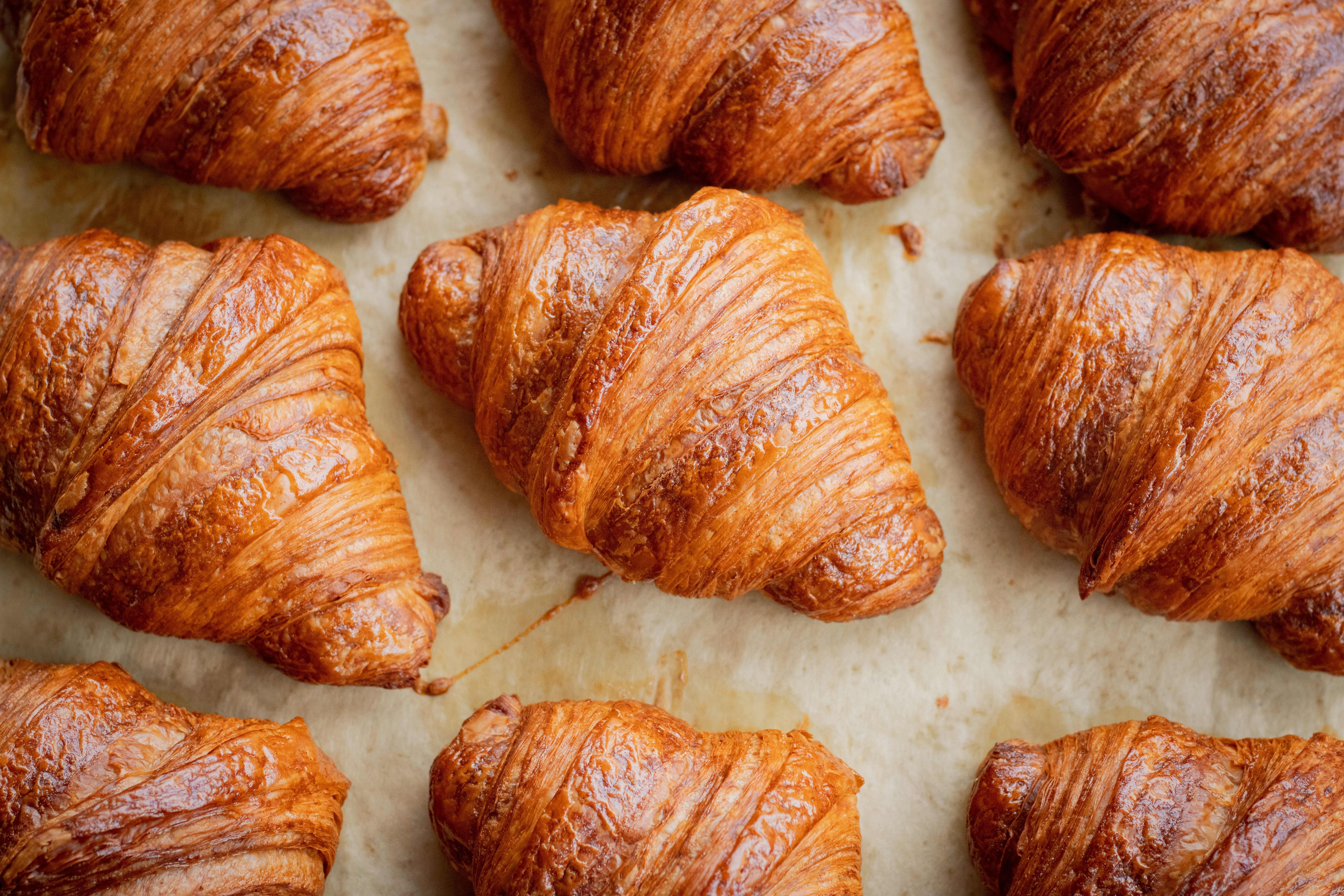
Photo by Conor Brown on Unsplash
If you've ever rolled out croissant dough by hand at 4 a.m. and felt your forearms give out before the batch did, you've probably wondered whether a dough sheeter is worth the investment. Below are answers to some common questions that will help you decide.
What does a dough sheeter actually do? A dough sheeter passes dough between two rollers, flattening it to a consistent, adjustable thickness in seconds. Instead of rolling pins, muscle, and guesswork, you get the same thickness on sheet one and sheet fifty.
Isn't rolling by hand basically the same thing? Not once volume climbs. Hand-rolling introduces variation: uneven thickness means uneven baking, wasted product, and inconsistent portioning. A sheeter also saves the labor hours your team is currently spending on repetitive rolling - hours that add up fast during croissant, puff pastry, or pizza dough production.
Do I need one if I'm not a full-scale bakery? It depends on volume, not size. A shop making a few dozen pastries a day may get by with a rolling pin. But if you're laminating dough regularly, prepping pizza crusts in batches, or find rolling is becoming a bottleneck before your morning rush, a sheeter pays for itself in labor time and product consistency alone.
What should I look for in a commercial sheeter? Batch capacity and thickness range matter most. Our AE-DS650B-SS, for example, handles 15 lb batches and adjusts from 0mm to 50mm - enough range to go from delicate pastry sheets to pizza dough on the same machine.
Floor model or bench model - what's the difference? Mostly space and volume. A floor sheeter like the AE-DS650B-SS has a much larger footprint (roughly 111" L x 44.5" W once assembled) and a longer working surface to match, which suits kitchens running higher daily batch counts. A bench/countertop sheeter has a compact footprint (around 71" L x 32–36" W) and often folds up when not in use, which makes more sense for a smaller shop with limited floor space or lower daily volume. Batch capacity scales with the machine too, so measure your space and your typical batch size before deciding.
How are the controls different between floor and bench models? On our floor models, you get both hands-free foot pedals and a locking control lever to reverse the belts and run the dough back and forth - so one hand can stay on the dough while the other manages thickness. Bench models rely on the front-mounted control lever alone, with no foot pedal. It's a smaller detail, but it affects workflow: floor models let an operator keep both hands on the dough during lamination, while bench models are built for simpler, lower-volume runs.
What does cleaning and maintenance actually involve? Less than people expect, if the machine is built for it. Look for easy-to-remove scrapers - ours pull out without tools for daily cleaning - and a safety guard that auto-shuts off the machine when it's opened, so cleaning is both faster and safer. Removable working tables and pop-up conveyor rollers also make it easier to get into every part of the machine for a proper wipe-down or belt replacement.
What electrical setup do these machines need? Our dough sheeters run on standard 220V/1-phase power, so most commercial kitchens can accommodate them without special electrical work. On the floor models, that 220V/1-phase supply feeds an inverter that powers a 1.5HP 3-phase motor - you get 3-phase performance without needing 3-phase service in the building. As always, confirm your outlet matches the nameplate spec before installing, since an improper connection can void the warranty.
Bottom line: If dough prep is eating into your labor budget or your thickness is inconsistent from batch to batch, a sheeter isn't a luxury - it's a production tool that pays for itself. If you're rolling occasional small batches, you likely don't need one yet.
Have questions about sizing a sheeter to your bakery's volume - or whether a floor or bench model fits your space? We're happy to help you figure out what fits.
Chicago's Catering Industry by the Numbers
Image by Maxim Hopman Running a catering operation in Chicago means competing in a market that's shifting fast - and the numbers tell the story better than any anecdote. Here's where the industry stands heading into the second half of the year. $77.18 billion. That's the size of the U.S. catering market in 2025, on pace to [...]
What’s the Difference Between a Meat Cutter and a Meat Slicer?
Photo by Dave Garcia It's one of the most common calls our team takes: a customer asks for a "meat slicer" when what they actually need is a meat cutter. So the first question our sales team asks is simple - are you looking for something like a deli slicer or ham slicer? That one question [...]
What It Takes to Feed Thousands at a Chicago Summer Festival
Photo by Frederick Medina on Unsplash Chicago’s summer festival calendar is one of the most intense food service environments in the country. The Taste of Chicago attracts over a million visitors alone, not to mention Ribfest, Blues Fest, and countless neighborhood block parties. The vendors and caterers behind those booths aren’t cooking for tables of four. [...]
The Advantages of the OneHUB Collection
Limited space is a concern many restaurant owners keep in mind when purchasing equipment. Those with concern can rest easily when picking up the American Eagle® OneHUB collection. Not only can you use several different attachments that do several different functions, but you can also use the same motor unit with its small footprint. With [...]
Planetary Mixer - Why Choose It?
Planetary mixers are multi-functional mixers with a fixed, non-rotating bowl. The bowl can be raised and lowered into the mixing position. The utensil rotates around the non-rotating bowl like the way the planets rotate the sun. That’s why it’s called a Planetary mixer. This is a great choice as a pizza dough mixer as well a [...]
Meet Us @ FER VNEXT Connect On Sept 15, 2021
As you know the NAFEM Show was canceled this year, which was a disappointment for many of us in the industry. As such, American Eagle will be participating in FER VNEXT Connect, an event happening on Sept. 14-15 that will allow us to still meet with you like we would have in Orlando.The event offers [...]
We will be exhibiting at The NAFEM Show 2021 - Booth# 3201 - CANCELLED
Get ready for The NAFEM Show! We will be exhibiting on August 26-28, 2021 in Orlando, Florida at the Orange County Convention Center West Building. We will be at Booth# 3201. If you are attending, please stop by and take a look at our equipment. We will be happy to answer any questions you may have [...]
New Gold Series Planetary Mixers Now Available
In celebration of the past 25+ years American Eagle Food Machinery has begun offering restaurant and bakery equipment, we are proud to introduce our new Gold Series 20 quart and 30 quart Planetary Mixers, AE-20GA and AE-30GA. Engineered with craftsmanship to create artisanal and refined products, along with a unique gold finish, these machines add [...]
Some Tips For Your Business During COVID-19 Crisis
As you may know, the CARES Act has made money available to businesses to cover basic operating costs during the COVID-19 crisis through the creation of the Paycheck Protection Program (PPP). Please see this brief 2-page information fact sheet released by the Treasury Department here: https://home.treasury.gov/system/files/136/PPP--Fact-Sheet.pdfThere is a lot of information out there about how [...]